
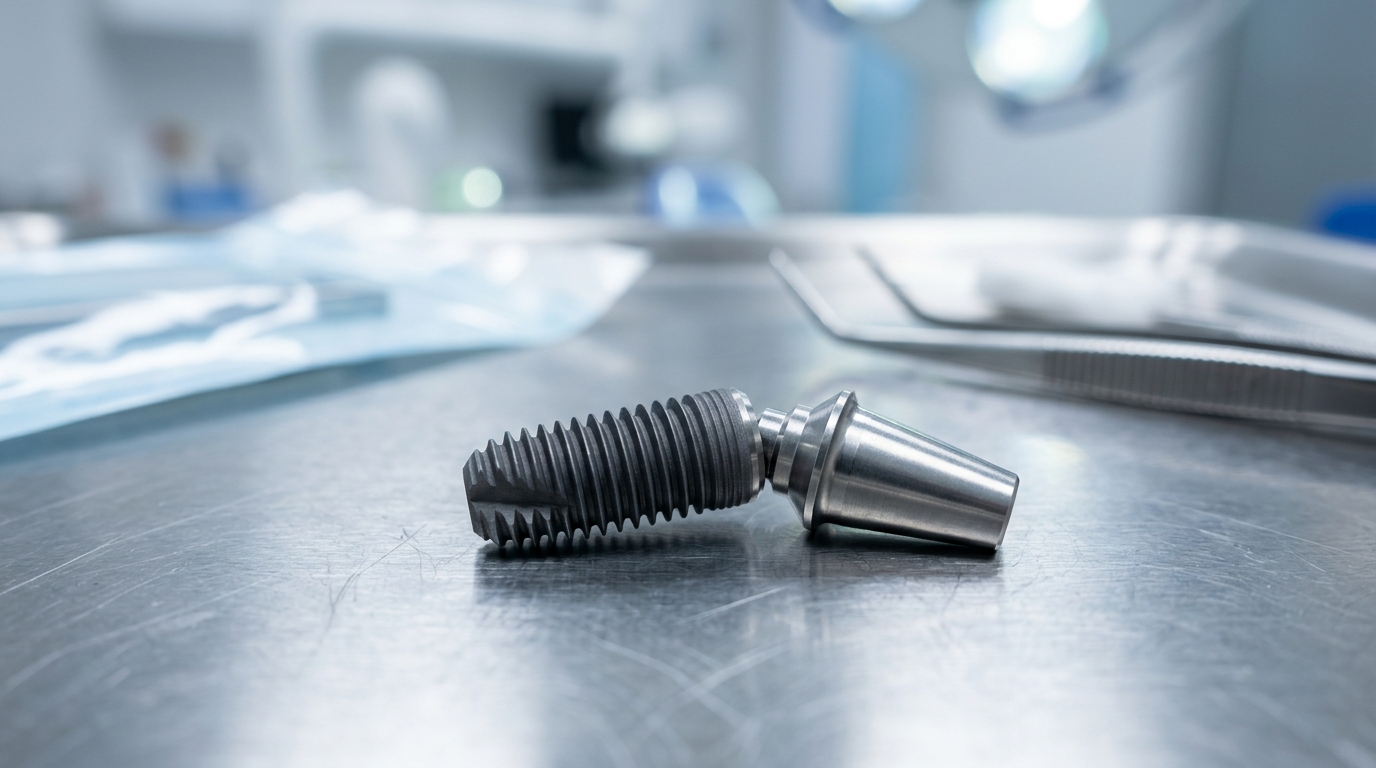
Ask ten experienced implant clinicians which connection they prefer and you’ll get a spirited debate long before you get consensus. That’s because the implant-abutment interface is where surgical precision and prosthetic longevity actually meet. The connection isn’t a detail buried in the catalog — it governs micro-movement at the joint, the seal against bacterial ingress, how load transfers to crestal bone, and how much flexibility you have when the case doesn’t go exactly as planned. Let’s cut through the geometry and talk about what genuinely changes outcomes at the chair.
The two dominant geometries
Modern connections cluster into two broad families, with plenty of hybrids in between. Internal hex (and internal polygon) connections rely on a flat-to-flat seating surface with an anti-rotational feature seated below the platform. They’ve been a workhorse for decades, are forgiving to restore, and offer a deep, well-understood engagement. Conical (Morse taper) connections seat the abutment into a tapered internal wall — typically in the range of 5 to 11 degrees — creating a friction-fit that mechanically locks the components together, usually paired with a separate indexing feature for orientation.
The distinction that matters isn’t the name — it’s how the two handle the forces that try to pry the abutment loose thousands of times a day.
Micro-movement and the microgap
Every two-piece implant has a joint, and every joint under cyclic load has the potential to move. That micro-movement, combined with the inevitable microgap at the interface, is the mechanism behind two chronic annoyances: screw loosening and bacterial pumping at the connection.
Conical connections excel here. Because the taper distributes load along an angled wall rather than concentrating it on the screw and a flat seat, the friction-fit resists the lateral micro-movements that unscrew abutments over time. The result is generally fewer screw-loosening events and a tighter, more stable seal. Internal hex designs are not inherently unstable — a well-machined hex with good tolerances and proper torque performs reliably — but they place more of the anti-rotational and retentive burden on the screw itself. When you see recurrent loosening on a hex platform, tolerance, torque protocol, and off-axis loading are usually the culprits, not the concept.
The clinical translation: for single units in the posterior or anywhere you expect meaningful lateral and parafunctional load, the mechanical stability of a conical joint is a real advantage. For screw-retained multi-unit work where components are splinted and cross-arch stabilized, the difference narrows considerably.
Platform switching and crestal bone
Platform switching — seating an abutment narrower than the implant platform — has become almost synonymous with conical connections, though the two aren’t identical. The logic is sound and well supported clinically: moving the microgap and the associated inflammatory infiltrate horizontally inward, away from the outer edge of the crestal bone, tends to preserve peri-implant bone height compared with a flush, matched interface.
Conical connections deliver platform switching almost by design, because the taper naturally medializes the connection. Many internal hex systems now offer platform-switched components as well, so this is no longer an exclusive property of taper geometry. What matters chairside is that you are deliberately choosing a switched configuration when crestal preservation is a priority — thin buccal plates, esthetic zone cases, or patients where you simply cannot afford to lose the first millimeter of bone.
Be honest about the ceiling on this, though. Platform switching supports crestal stability; it does not rescue a poorly positioned implant, an over-contoured emergence profile, or inadequate keratinized tissue. Geometry buys you margin, not immunity.
Prosthetic flexibility and where hex earns its keep
This is where the conversation often flips. Deep conical connections give beautiful mechanical stability, but that same geometry can constrain you restoratively. Reduced or absent flexibility in angulation correction, tight requirements for seating and indexing, and the friction-lock itself can complicate retrieval — a locked taper sometimes wants to bring the whole implant with it when you remove a healing abutment or provisional.
Internal hex platforms tend to be more forgiving for the restorative team. Component libraries are broad, angled and multi-unit abutments are abundant, seating is unambiguous, and retrievability is predictable. For full-arch and multi-unit prosthetics where you’re managing divergent implant angulation and need generous abutment options, that flexibility has genuine value.
A practical way to frame it: conical geometry optimizes the joint; hex geometry often optimizes the workflow. Neither is universally superior — the right answer depends on what the case demands.
What actually matters chairside
Strip away the marketing and a few principles hold regardless of connection philosophy:
- Manufacturing tolerance beats geometry type. A precisely machined hex outperforms a loosely toleranced taper every time. Component fit and quality control matter more than the shape on the brochure.
- Torque to spec, and re-torque. Preload is everything. Apply the manufacturer’s recommended torque with a calibrated wrench, wait several minutes for settling, and re-torque before final delivery. This single habit prevents more loosening than any connection choice.
- Seat cleanly and verify. Blood, tissue, or cement debris in the connection compromises seating on any platform. Confirm complete seating radiographically before final torque — an incompletely seated conical abutment is a mechanical failure waiting to happen.
- Match the connection to the load and the restoration. Single posterior unit with parafunction? Lean conical for joint stability. Multi-unit or full-arch with angulation to manage? Hex flexibility may serve you better. Esthetic zone with a thin plate? Prioritize a platform-switched configuration whichever family you choose.
- Stay within one system per case when you can. Mixing original and third-party components introduces tolerance mismatch precisely at the interface you’re trying to protect.
The bottom line
Connection type is a meaningful lever, but it’s one lever among several. Conical connections give you superior micro-movement control, an excellent seal, and built-in crestal support — at some cost to restorative flexibility and retrievability. Internal hex connections give you proven reliability, broad prosthetic options, and easier handling — provided you respect tolerance and torque protocols. The clinicians who get the best long-term results aren’t the ones loyal to a single geometry; they’re the ones who match the connection to the biomechanical and prosthetic demands of the case in front of them, then execute the fundamentals flawlessly. Choose deliberately, seat precisely, torque correctly — and the connection debate mostly takes care of itself.